
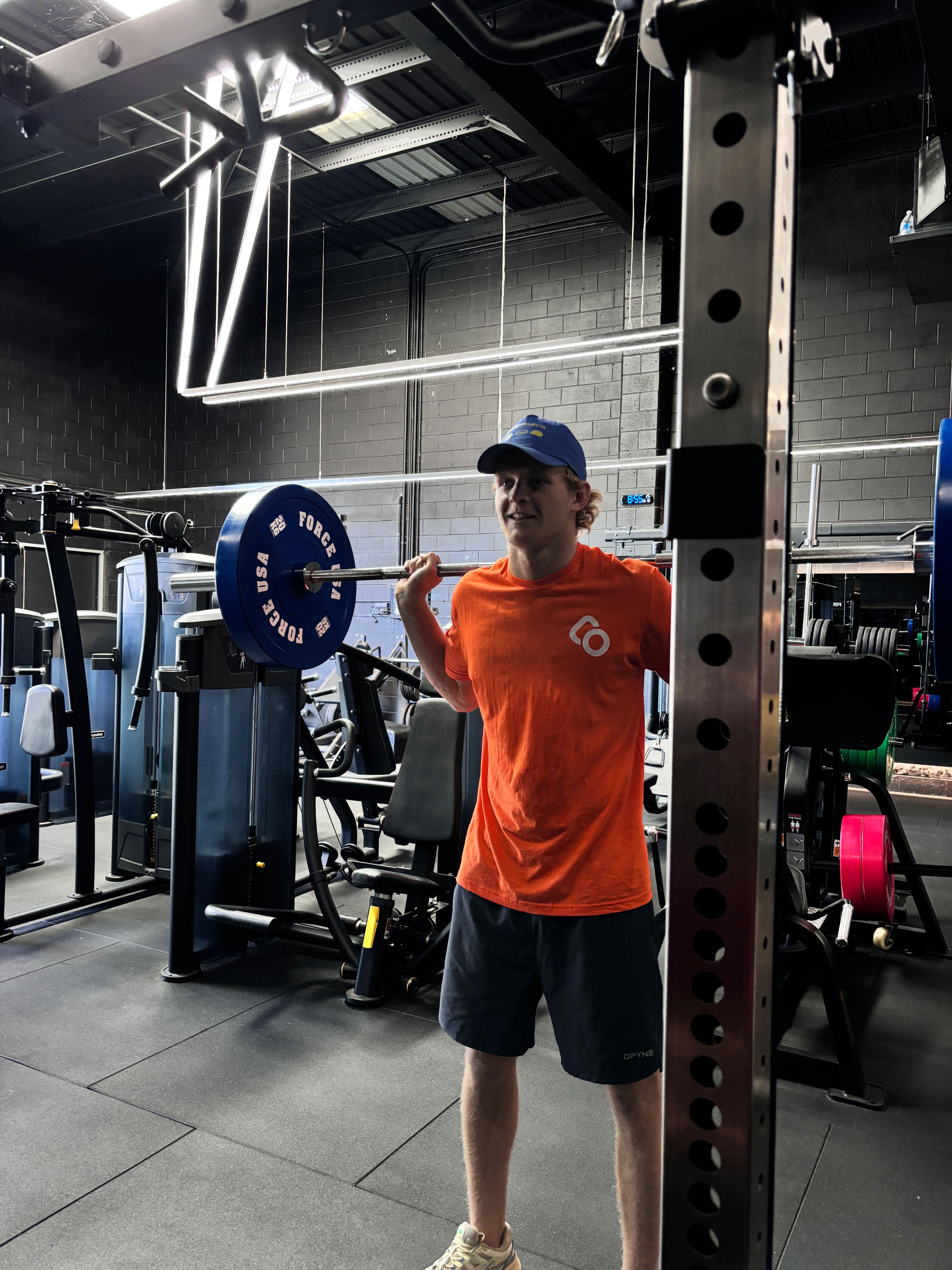
What makes a winning team?
Results on game day are built in training.
Why training matters
Speed, strength, fitness, skill execution, and resilience are developed long before competition. For teams to perform, athletes must be correctly selected, physically prepared, and available to play fast, strong, confident, and uninjured. Training is where this is won or lost.
The concept
Modern training happens in groups, but performance adapts at the individual level. This gap limits how athletes are coached, developed, and held accountable. The future isn’t choosing between group based or individual training, it’s combining both to deliver individual insight and accountability at team scale.
The current reality for teams and sporting organisations
Training is evolving at a rapid rate. Sports science and research now clearly define how athletes should be trained to maximise performance and reduce injury risk. The challenge for most organisations isn’t a lack of knowledge, it’s the ability to apply it consistently across teams and individuals.
Limitation 1: Too many athletes, not enough coaches
During training, it’s common for one coach to manage ten to forty athletes. It’s unrealistic to expect coaches to monitor every athlete closely. The focus shifts from players to the group as a whole. As a result, quieter or less confident athletes are often overlooked, despite these players benefiting most from targeted feedback. Attention shifts away from individuals, leading to uneven development, widening performance gaps, and loss of confidence among those left unseen.
Limitation 2: Athlete accountability is low
One of the most frustrating challenges for coaches is maintaining athlete accountability and training intent in group environments. Without individual effort being closely monitored or measured, focus and intensity vary widely between players and sessions. Standards gradually slip. Without clear, visible feedback, athletes struggle to connect training habits to performance outcomes, reducing buy in and slowing long term development.
Limitation 3: Outdated performance data
When performance is tracked, many organisations remain limited to basic metrics such as sets, reps, and weight. While useful, these exist in isolation and lack context around how the work was actually performed. Coaches have limited visibility into training quality, making it difficult to assess intensity, movement range, execution speed, or fatigue.
The Cutout Solution
It once took teams of ten workers with shovels to dig a hole. The breakthrough wasn’t more workers or more effort, it was a bulldozer. Sport is no different. Organisations don’t need more coaches, they need tools appropriate for the job.
Group training is powerful. It builds energy, culture, and efficiency. Cutout doesn’t fight this, it upgrades it. By measuring every athlete in real time, Cutout makes individual performance visible within group sessions.
Traditional sets, reps, and weight are enhanced with range of motion, tempo, velocity, and speed loss across a set. With this data visible to both coaches and athletes, accountability becomes automatic, effort becomes consistent, and individual behaviour lifts the standard of the entire group.
In 2026, performance should not be limited by outdated tools. Cutout allows individual development to scale across teams, unlocking higher standards, stronger buy in, and more resilient, high performing athletes.